
What You Don't Own When You Buy in Eastwood Estates
August 27, 2026
August 27, 2026
Roughly seven miles from Henderson, a wildcat well called Daisy Bradford No. 3 blew in on October 3, 1930. Columbus "Dad" Joiner had already lost two holes and most of his money finding it. The well he finally completed opened what became the largest oil field in the lower 48 states, and it reshaped what "owning land" means in Henderson to this day.
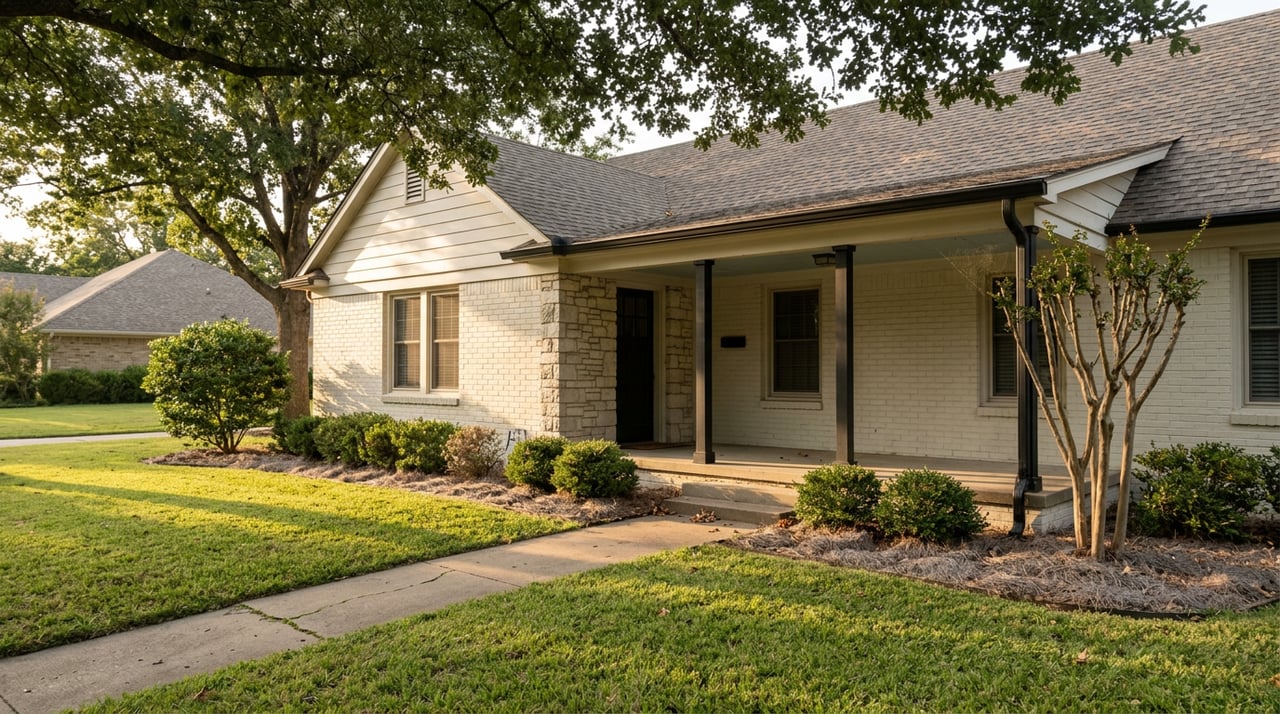
That history is why, when you sit down to close on a brick ranch in Eastwood Estates, your title commitment will almost certainly include a line most buyers read once, don't understand, and never think about again: something to the effect of "all oil, gas, and other minerals, previously reserved or conveyed." Buyers assume that owning the lot means owning everything from the fence line down to the center of the earth. In Rusk County, that assumption is usually wrong, and it has been wrong since long before your subdivision was ever platted.
Texas law treats the surface of a piece of land and the minerals beneath it as two separate legal estates. They can be owned together, and often are in newer parts of the state where no one has ever severed them. But in a county whose economy was built on oil leases decades before most residential subdivisions existed, the far more common pattern is a surface estate that changed hands many times over, sitting on top of a mineral estate that was carved off, sold, or leased generations ago and never reunited with the land above it.
That's not a defect in your Eastwood Estates deed. It's simply how title in this part of East Texas usually reads. The Texas State Historical Association's account of the East Texas Oil Field describes a field that, by the time Joiner's discovery well was followed by successful wells to the north and south, had already triggered a leasing frenzy across Rusk County. Farmers signed leases before they harvested their cotton. Certificates and mineral interests changed hands as currency. Nearly a century of transfers later, tracing exactly who holds what beneath any given lot requires a title search, not a guess.
When a title company in Rusk County prepares a commitment, the Texas Department of Insurance's rules on mineral exceptions say the mineral exception on Schedule B may be a standard exception, or may reflect a recorded reservation or conveyance somewhere in the chain of title, filed with the Rusk County Clerk's office in Henderson, the official custodian of deeds, mineral conveyances, and lease records for the county. Where a recorded reservation or conveyance created that split, a prior owner kept the minerals when they sold the surface, or sold the minerals while keeping the surface, and that split has followed the property ever since.
This matters because Texas law doesn't treat the two estates as equals. The mineral estate is legally dominant, meaning its owner generally has the right to use as much of the surface as is reasonably necessary to explore for and produce what they own, even if the surface belongs to someone else entirely. The Railroad Commission of Texas explains the limits on that right: the accommodation doctrine requires a mineral operator to work around an existing, reasonable surface use when a workable alternative exists, and many cities also restrict drilling activity within their jurisdiction. In practice, that combination is why you don't see rigs going up in established subdivisions like Eastwood Estates. It doesn't mean the mineral rights vanished. It means the practical friction of drilling in a platted, occupied neighborhood is high enough that it rarely happens, not that the underlying legal split disappeared.
The easiest mistake a buyer makes is filing this under "1930s trivia" and moving on. Rusk County's oil and gas production didn't stop when the original boom faded. As of March 2026, the county ranked 11th among all Texas counties for oil and gas production measured in barrels of oil equivalent, with roughly 3,300 active wells still on the books out of more than 18,000 drilled in the county's history. That's not a dormant field. It's a working one, still generating royalty checks for whoever currently holds the mineral interest under a given tract, whether that's a family heir several generations removed from the original lease or a company that has since acquired it.
The Rusk County Appraisal District reflects that reality directly. Property in the county isn't appraised as a single lump. Real property, like your Eastwood Estates house and lot, is tracked in a separate account from any mineral interest tied to the same tract. If you own the surface but not the minerals, you're taxed on the house and land. Whoever owns the mineral interest, if it's actively producing, is taxed on that separately. Two owners, two tax accounts, one address.
None of this means you should walk away from a home you love in Eastwood Estates. It means the standard mineral exception on your title commitment deserves a few minutes of real attention instead of a skim. A few questions are worth bringing to your title company or closing attorney before you sign anything:
These aren't red flags. They're just the right questions for the county you're buying in. Most Eastwood Estates closings move through this exception without a second thought, because most buyers never end up in a position where a mineral owner actually exercises surface rights on an established residential lot. But understanding the paragraph before you sign it is different from hoping it doesn't matter.
I spent thirty years explaining things patients couldn't quite see for themselves, and closing paperwork isn't so different. The mineral exception on your title commitment is one of those East Texas details that looks alarming until someone walks you through where it came from and what it does and doesn't mean for the house you're actually buying. In Eastwood Estates, it's part of the same paperwork every neighbor before you has signed, going back to whenever that lot was first carved out of a larger tract that once had a lease on it.
If you're under contract or getting ready to write an offer on a home here and want to talk through what your specific title commitment says, reach out. I'd rather spend twenty minutes on the phone before closing than have you wondering about a paragraph you didn't fully understand after the fact.
Ready to talk through a specific property in Eastwood Estates or anywhere else in Henderson? Jennifer Ellis would love to help. Let's Connect.
Does a mineral reservation mean someone could drill in my backyard? It's legally possible in theory, since the mineral estate is dominant, but practically unlikely in an established subdivision. Municipal restrictions, the accommodation doctrine, and the simple cost of operating in a platted residential area all work against it. Your title company can also tell you whether there's an active lease on file, which is the clearest signal of near-term interest.
Will I be taxed on minerals I don't own? No. The Rusk County Appraisal District keeps mineral accounts separate from real property accounts. If you don't own the mineral interest, you aren't taxed on it. Whoever does hold that interest, if it's producing, is billed on their own account.
Does this affect my ability to get a mortgage or title insurance? Generally, no. Lenders and title companies in Rusk County see mineral exceptions frequently, but the exception may be a standard policy provision or may reflect a recorded reservation or conveyance in the chain of title. Ask your title company which applies to this property; either way, it rarely holds up a closing on its own.
This article is general information, not legal, tax or financial advice. Consult a qualified professional about your situation.
Stay up to date on the latest real estate trends.


Get assistance on determining current property value, crafting a competitive offer, writing and negotiating a contract, and much more. Let me guide you through your home-buying journey.
JENNIFER ELLIS
ADDRESS 117 E Main St Henderson, TX 75652