
What Woodbox Buyers Should Know About Septic Inspections
August 13, 2026
August 13, 2026
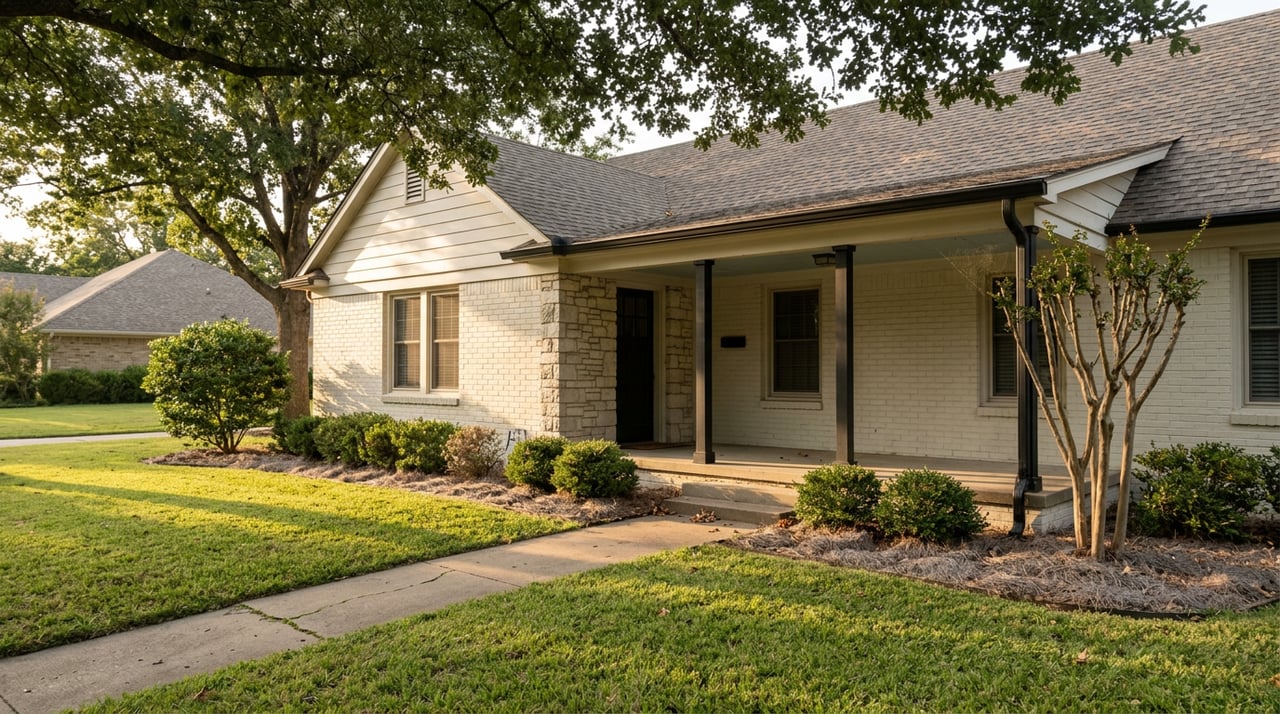
A house built in 1985 and a house built in 2000 can sit on nearly identical quarter-to-half-acre lots in the same subdivision, carry similar price tags, and still hide two completely different paper trails underground. That is the situation in Woodbox Estates, the neighborhood off Woodbox Drive in Henderson. One listing there, at 26 Woodbox Drive, is a 2,448-square-foot home built in 1985. Another, at 4 Woodbox, is a 2,827-square-foot home built in 2000 that recently listed at $425,000, or about $150 a square foot on a 0.4-acre lot. Same street. Same lot size range. Different decade, and a different set of rules governing what's buried in the yard.
Most people touring Woodbox homes are thinking about kitchens, outbuildings, and school proximity, and Woodbox gives them plenty to look at. The subdivision sits close to Henderson schools, Lake Forest Park, Walmart, Lowe's, and the Henderson Civic Center and Theater, so day-to-day convenience is rarely the sticking point. The sticking point that catches buyers off guard shows up later, during option period, when someone asks a simple question: does this house have a permitted septic system, and if not, why not?
Every septic system in Texas, technically called an on-site sewage facility or OSSF, falls under the Texas Commission on Environmental Quality. A permit and approved plan are required to construct, alter, repair, extend, and operate one. That sounds like a universal rule, and mostly it is, except for one date that splits the housing stock in Woodbox and every other pre-1990s East Texas subdivision into two very different categories.
The Texas Septic Guide says systems installed before September 1, 1989, may predate TCEQ's permitting program entirely. If the system meets a short list of conditions, it can be grandfathered: T&R Septic says it must have been installed before that date and cannot be treating more sewage than it was designed for when installed. A 1985-built home in Woodbox can have no permit on file anywhere, and that is not a red flag by itself.
Compare that to a home built after 1989. Permits filed after that date include a site diagram showing the septic tank location, drain field layout, setback distances, and system type installed, which means a buyer looking at 4 Woodbox has a document trail a buyer looking at 26 Woodbox may not.
| Pre-September 1989 build | Post-September 1989 build | |
|---|---|---|
| Permit likely on file | Often none | Yes |
| Site diagram available | Usually not | Yes, includes tank location and drain field layout |
| What the disclosure form can confirm | Only what the seller personally knows | Same, but often backed by county paperwork |
| Buyer's best verification step | Independent septic inspection, not a records search | County record request plus inspection |
This is not a Woodbox-specific quirk. It is a statewide rule that happens to land squarely on this neighborhood because of when most of it was built. Rusk County, where Henderson is the county seat, handles its own septic inspections through the county's environmental office, and that office is the first call for anyone trying to find out whether a specific address has a permit at all.
Buyers often assume the Texas Seller's Disclosure Notice, required under Property Code Section 5.008, functions like an inspection report. It does not. The statute requires the notice to be completed to the best of the seller's belief and knowledge as of the date it is signed. If the information is unknown to the seller, the seller marks the box "unknown," and that act alone satisfies the law.
That distinction matters more in a neighborhood like Woodbox than it would in a newer subdivision with a single build year. A seller who bought a 1985 home with an already-grandfathered septic system has no county paperwork to consult. They can honestly write "unknown" next to the septic question and be fully compliant. A blank or unknown answer on the form is not evidence the system is fine. It is evidence that nobody, including the seller, necessarily knows either way.
That is exactly why the disclosure form and an independent inspection are not substitutes for each other. One tells you what the seller is willing to say. The other tells you what is actually happening underground.
Search "Texas foundation problems" or "Texas septic soil" and nearly everything that comes back assumes expansive clay, the kind that swells when wet and shrinks in drought, common across the Blackland Prairie running through Dallas-Fort Worth and Houston. That advice is accurate for those markets. It is not the full picture for Henderson.
Clay-rich soils dominate areas like Longview, Marshall, and Kilgore, prone to the expansion and contraction cycle that drives most Texas foundation repair marketing. Sandy soils are more common toward Tyler and Henderson, and they behave differently. Sandy soil drains faster, which is generally good news for a septic drain field's ability to process effluent, but it comes with its own failure mode: settling and erosion rather than the heave-and-crack pattern clay produces.
The practical takeaway is not that Henderson properties are risk-free. It is that a buyer who reads five articles about foundation and septic risk in Texas, absorbs the clay-soil framework, and then applies it wholesale to a Woodbox inspection is asking their inspector the wrong questions. The right question for sandy soil is whether the drain field shows signs of erosion or settling around the tank and lines, not whether the slab is heaving.
Henderson's broader housing numbers are worth a second look before anyone assumes speed is the priority. As of May 2026, the median sale price across Henderson, Texas sat at $227,364, up 8.5 percent year over year. As of July 2026, the median list price across the same market was $274,000, with homes spending a median of 113 days on the market.
Those two numbers moving in different directions is not a contradiction so much as a reminder that a list price and a sale price measure different things, and a citywide median tells you almost nothing about a specific 0.4-acre lot on Woodbox Drive with a build year that predates modern septic recordkeeping. What the 113-day median does tell a buyer is that homes here are not moving so fast that there's no time to do this correctly. A county records request and a proper septic inspection can typically happen inside a normal option period without derailing a contract.
The build year on the listing sheet is the first thing to check, not the last. If it's before 1989, plan on treating the septic system as an unknown quantity regardless of what the disclosure form says, and budget for an independent inspection rather than a records search that may come back empty. If it's after 1989, request the site diagram from the county alongside the inspection so you know what you're comparing the inspector's findings against. Either way, don't let a clean-looking disclosure form stand in for a professional's eyes on the actual system.
If a home is sold "as is," what does that mean for repairs? Selling as-is means the seller won't make repairs.
What if Rusk County has no record of a septic permit at all? That's expected for many pre-1989 systems and isn't automatically a problem. It does mean the burden shifts entirely to a physical inspection, since there's no paper trail to lean on for reassurance either way.
Woodbox is a neighborhood where the paperwork gap is built into the calendar, not the condition of any particular house. Knowing which side of 1989 you're shopping on tells you which questions to ask before you're past your option period.
If you're weighing a house in Woodbox or anywhere else in Henderson and want someone who'll walk the actual paperwork with you before you write an offer, Jennifer Ellis has spent years helping East Texas buyers ask the right questions early. Let's Connect.
This article is general information, not legal, tax or financial advice. Consult a qualified professional about your situation.
Stay up to date on the latest real estate trends.


Get assistance on determining current property value, crafting a competitive offer, writing and negotiating a contract, and much more. Let me guide you through your home-buying journey.
JENNIFER ELLIS
ADDRESS 117 E Main St Henderson, TX 75652